
Connect with me
1
11
Highly skilled Python and ML enthusiast with a strong passion for learning and experimentation, as evident from my 156 public repositories and 163 professional network followers. With expertise in languages such as Python, Java, and C, I'm well-versed in leveraging libraries like OpenCV, pandas, and PyTorch to drive innovative projects. My work has spanned across various domains, including NLP, image processing, and web development using frameworks such as Flask.
Palakkad, Kerala, India
Making Computers Understand Human LanguageWhat is NLP ?Imagine talking to your dog and expecting it to respond with “Sure, I’ll bring the newspaper!”Sounds silly, right? That’s because dogs don’t understand human language. In the same way, computers don’t understand language unless we teach them.NLP (Natural Language Processing) is how we teach computers to understand, interpret, and even generate human language , whether it’s text or speech.Think of NLP as a bridge between human language and machine understanding.Why do we need it?We generate tons of text daily: tweets, reviews, emails, blogs, etc. But computers don’t “get” words like we do.For a machine, the sentence:“This movie is lit 🔥”…means nothing unless we train it to understand the meaning of “lit” as positive slang.We need NLP so:Search engines can find what we mean.Chatbots can reply smartly.Voice assistants can respond.Social media can detect hate speech.What is a document?In NLP, a document isn’t just a PDF or a Word file. It’s any chunk of text — a sentence, a paragraph, a tweet, a product review.For exampleOne tweet = 1 documentOne news article = 1 documentA chatbot conversation = 1 documentIf NLP is cooking, a document is an ingredient.How Neural Networks Work? (Explained Simply)Imagine you’re trying to make a smoothie 🥤:1. You take some fruits (like banana, strawberry, mango) — These are your input numbers.2. You mix them using a recipe — This recipe is a matrix (a table of weights). You multiply the fruits (inputs) with the recipe (weights).3. You taste and adjust — If something tastes off (negative values), you fix it by replacing the bad parts with 0. This is like using an “activation function” (like ReLU), which keeps only the positive flavors.4. Blend and repeat — You keep blending (repeating steps 1–3) with different layers (like sieves or filters), each time refining the flavor until you get the perfect smoothie.This is what a neural network does:It takes numbers (your data), passes them through layers (like filters), removes the bad stuff (negative values), and keeps learning to improve the outcome — just like refining a smoothie recipe.TokenizationBefore feeding text to a machine, we split it into smaller parts (called tokens).Analogy: Think of slicing a loaf of bread 🍞 into slices. That’s tokenization.Sentence:“NLP is fun!”Tokens:[“NLP”, “is”, “fun”, “!”]Examples of Tokenized SentencesSentence: “I love AI.”Word-level: [“I”, “love”, “AI”, “.”]Character-level: [“I”, “ “, “l”, “o”, “v”, “e”, “ “, “A”, “I”, “.”]Subword-level (BPE): [“I”, “lo”, “ve”, “AI”, “.”]Use depends on your model’s needs.NumericalizationComputers don’t understand words — they understand numbers.So we convert tokens into numbers.Think of giving each word an ID badge, so computers can recognize them.Example:{“I”: 1, “love”: 2, “AI”: 3, “.”: 4}So, the sentence “I love AI.” becomes [1, 2, 3, 4]Splitting Dataset for NLP TrainingA dataset should be divided into:Training Set (80%) — Used to train the model.Validation Set (10%) — Used for tuning hyperparameters.Test Set (10%) — Used for final evaluation.Analogy:Training = School 🏫Validation = Practice exams 📘Test = Final exam 📝Pearson Correlation CoefficientImagine you’re comparing how closely two students’ answers match.The Pearson correlation coefficient tells how strongly two variables are related — like predicted sentiment vs. actual sentiment. +1 → Strong positive relationship 0 → No relationship -1 → Strong negative relationshipIn NLP, it helps evaluate how well your model’s output matches ground truth.Bonus Tip: Kaggle has an API to download dataYou can use the Kaggle API (just like a kitchen robot ) to download datasets without opening the website.kaggle datasets download -d username/dataset-nameConclusionNLP helps machines understand human language.With tools like tokenization, numericalization, and neural networks, we give computers the ability to “read” and “respond” just like humans.Think of NLP as teaching your computer to read, write, and speak — with the ultimate goal of making technology feel more human.
In his book Do Epic Shit, Ankur Warikoo shares his experiences and reflections on topics like success, failure, habits, self-awareness, entrepreneurship, and relationships. His insights are simple yet powerful, offering inspiration and practical lessons for everyone. Let’s break down some of the key ideas that can help us lead a more fulfilling life:1. Redefining Success and FailureSuccess isn’t a fixed target; it’s personal and evolving. He encourages us to define success based on what truly matters to us, rather than what society expects. He emphasizes that failure is not the opposite of success but an integral part of the journey. Embrace failures, learn from them, and keep moving forward. They are the stepping stones that lead us closer to our goals.Failure helps us develop resilience, patience, and a better understanding of ourselves. By accepting setbacks as part of our growth, we learn to view life as a series of lessons rather than a series of tests. He urges us to accept failure with grace, to use it as a mirror to see our own shortcomings, and then work on improving those areas. Every setback is an opportunity for growth.If your goal is to start a business and you fail in your first attempt, instead of seeing it as a complete loss, view it as an opportunity to learn what went wrong. This could involve adjusting your approach, understanding your target audience better, or improving your product. Each failure becomes a stepping stone towards a better, more successful version of your business. Maybe you learn that your marketing strategy was lacking, or perhaps you realize that your product didn’t solve a real problem. Each insight becomes invaluable for your next attempt.2. The Power of Habits Over GoalsWhile goals are often glorified, He believes that habits are what ultimately build us. Creating small, consistent routines can be more impactful than chasing big goals. Whether it’s waking up early, reading every day, or taking time for self-reflection, habits help us become better versions of ourselves. The trick, he says, isn’t about setting big targets, but about taking small, daily actions towards what matters most.Habits make our actions almost automatic, taking away the mental load of constant decision-making. The cumulative effect of consistent habits is often much greater than sporadic bursts of effort. He points out that habits help lay the foundation for success, making each day productive and fulfilling in small but significant ways.Instead of setting a goal like “I want to read 50 books this year,” establish a habit of reading for 20 minutes every day. Over time, this simple habit will lead you to finish many books without feeling overwhelmed by a lofty goal. By focusing on the habit, you also enjoy the process rather than stressing over the end result, which makes the journey more enjoyable.3. Embracing Vulnerability and AuthenticityHe shares that showing vulnerability and being true to yourself is powerful. He suggests that we should not be afraid to share our stories or express our struggles. In a world where everyone tries to appear perfect, authenticity is what makes us relatable. Your failures, struggles, and lessons learned can inspire others. Just by being yourself, you make an impact.Authenticity helps build deeper relationships and trust, both personally and professionally. He believes that by showing our true selves, we create a space where others feel comfortable doing the same. Vulnerability can also be a strength in leadership, making people more approachable and fostering genuine connections.If you’re struggling with mental health issues, sharing your story with friends or on social media can help others who are dealing with similar problems feel less alone. This authenticity not only fosters connection but also encourages others to be vulnerable and open. It shows that it is okay to struggle and still move forward, and that no one needs to go through it alone.4. Relationships Matter More Than Anything ElseLife is not just about career milestones; it’s also about the relationships we build. He stresses the importance of nurturing the relationships around us — family, friends, and even with ourselves. Spending quality time, showing appreciation, and being present for those who matter most is key to finding true happiness.Relationships are the backbone of a fulfilling life. Warikoo emphasizes that the connections we build with people are what will sustain us during difficult times. Instead of being consumed by work or personal goals, we should take time to invest in the people around us. Simple gestures, like being present, actively listening, and showing empathy, go a long way.Set aside time each week to have dinner with your family without any distractions. This simple act of being present can strengthen bonds and create lasting memories, which are far more fulfilling than just career achievements. It’s these moments of laughter, shared meals, and honest conversations that bring a sense of true fulfillment.5. Don’t Get Stuck in Comfort ZonesGrowth requires stepping out of comfort zones, and Warikoo advises against letting comfort define our choices. Whether it’s about career, fitness, or personal development, the idea is to continuously challenge ourselves. Comfort can be alluring, but stepping out and embracing challenges is what drives growth and brings deeper satisfaction.The comfort zone is where dreams go to die. He encourages us to push ourselves beyond what feels easy or safe. By stepping out of our comfort zone, we allow ourselves to experience new things, learn new skills, and ultimately grow as individuals. This could mean having difficult conversations, taking on a new challenge at work, or pursuing a hobby that intimidates us.If public speaking scares you, consider joining a local Toastmasters club or volunteering to give a presentation at work. By stepping out of your comfort zone, you develop skills and confidence that will help you grow personally and professionally. The more you practice, the easier it becomes, and over time, what was once scary becomes a source of strength.6. Luck is the Result of Consistent ActionHe debunks the myth that success comes purely from luck. He believes luck happens when preparation meets opportunity. By showing up every day, putting in the work, and being persistent, we create our own “luck.” Luck is often just the product of repeated effort over time.It’s not about waiting for the perfect opportunity, but about being ready when the opportunity comes. Consistent effort often leads to unexpected opportunities, and people who appear “lucky” are usually those who have been putting in the work behind the scenes. He encourages us to create their own luck through persistence and dedication.If you want to get a promotion, consistently putting in the effort, improving your skills, and taking on additional responsibilities will increase your chances of being “lucky” when a new opportunity arises at work. Luck is about being in the right place at the right time, but also being ready to seize the moment.7. The Importance of Self-TalkThe stories we tell ourselves shape our reality. He advises practicing positive self-talk to improve our self-worth. Instead of focusing on our shortcomings, we should remind ourselves of our strengths, our past victories, and our capacity to learn. If we can change the way we speak to ourselves, we can change our outlook on life.Our inner dialogue greatly impacts our actions and our perception of the world. Warikoo stresses the need to become aware of negative self-talk and replace it with affirmations that are constructive and motivating. Positive self-talk can boost confidence, improve mood, and help us approach challenges with a more optimistic mindset.When faced with a setback, instead of saying, “I always fail,” try saying, “I’ve faced challenges before, and I’ve learned from them. This is just another opportunity to grow.” This shift in self-talk can help maintain motivation and resilience. It turns obstacles into learning experiences rather than sources of discouragement.8. Live a Multi-Faceted LifeWe often box ourselves into single identities — entrepreneur, student, artist — but He believes that we can be many things. He encourages readers to explore multiple interests and not limit themselves to just one role. We can have a career, a hobby, and also pursue creative outlets. Life is richer when we live it with diverse experiences.Exploring different roles and interests not only makes life more exciting but also helps us grow in unexpected ways. He advocates for a diverse life that involves creativity, learning, and exploration. By allowing ourselves to pursue multiple passions, we become more fulfilled and better equipped to handle different aspects of life.You might be an engineer by day, but you can also be a painter on weekends and a blogger in your free time. Embracing multiple interests keeps life exciting and fulfilling and helps you discover new passions. This variety brings balance, prevents burnout, and ensures that we keep learning and growing in multiple dimensions.Conclusion: Start Today, No Matter How SmallHis message is simple: start today. Whatever it is that you’ve been putting off, take that first step. Time will pass anyway, and a year from now, you’ll either have results or regrets. Choose results, even if they come from small, imperfect actions.The key is to take the smallest possible action that will move you in the direction of your goals. Even if it seems insignificant, small steps add up over time. Warikoo encourages readers not to be paralyzed by fear or perfectionism but to start where they are and build momentum from there.If you’ve always wanted to get fit, start with just a 10-minute walk today. It may seem small, but it’s the first step towards building a consistent fitness routine that can transform your health over time. Small, repeated actions create habits, and those habits are what lead to significant change.The lessons in Do Epic Shit are reminders to live with intention, embrace the ups and downs, and stay true to ourselves. If there’s one thing to take away, it’s that epic things are built from small, consistent, and courageous actions. Every journey begins with a single step, and it is these small steps, taken consistently, that lead to extraordinary outcomes.

Photo by Nik on UnsplashIn recent years, Python has gained massive popularity as a high-level, general-purpose programming language, renowned for its user-friendly nature and uncomplicated structure. Nonetheless, as your codebase expands, so does the complexity, and your code may lose efficiency. Slow code can be responsible for an unpleasant user experience, wasted time, and reduced productivity. Thankfully, there are numerous techniques and strategies that you can implement to enhance the efficiency of your Python code. In this article, we’ll delve into some of the most effective methods for optimizing your Python code, thereby boosting its speed, dependability, and manageability.Table of ContentsIntroductionProfiling Your CodeAvoiding Inefficient LoopsList ComprehensionsUsing Built-in FunctionsLazy EvaluationAvoiding Global VariablesThe Power of NumPyCaching ResultsMultiprocessing and ThreadingUsing LibrariesUsing a CompilerTesting Your CodeConclusionIntroductionPython is an interpreted language, implying that it processes each line of code in a sequence. Consequently, the efficiency of each line is crucial to the overall speed of your code. As your code becomes more complex, it’s natural to overlook inefficient code, causing slower processing and decreased performance. However, there are several techniques and practices you can employ to optimize your Python code and improve its efficiency.Profiling Your CodeProfiling is the process of measuring the performance of your code. Python offers many profiling tools like cProfile and PyCharm that make profiling code a breeze. By utilizing these profiling tools, you can efficiently locate the bottlenecks in your code and optimize them to enhance its overall performance.import cProfiledef my_function(param1,param2): # ... some code ...cProfile.run('my_function(param1,param2)')Avoiding Inefficient LoopsPython, like many programming languages, relies heavily on loops in its operations. However, loops can also be a major source of inefficiency in your code. In particular, nested loops can quickly become a performance bottleneck. Python has numerous built-in functions, including map(), filter(), and reduce(), that can be employed to streamline loops and optimize them for better performance. These functions are often more efficient than manually iterating through a list or dictionary.map()The map() function applies a given function to each element of an iterable and returns an iterator of the results.def square(x): return x**2my_list = [1, 2, 3, 4, 5]squared = map(square, my_list)print(list(squared)) # Output: [1, 4, 9, 16, 25]filter()The filter() function returns an iterator containing the elements from an iterable for which a given function returns True.def is_even(x): return x % 2 == 0my_list = [1, 2, 3, 4, 5]evens = filter(is_even, my_list)print(list(evens)) # Output: [2, 4]reduce()The reduce() function applies a given function to the first two elements of an iterable, then to the result and the next element, and so on, until all elements have been processed.def is_even(x): return x % 2 == 0my_list = [1, 2, 3, 4, 5]evens = filter(is_even, my_list)print(list(evens)) # Output: [2, 4]List ComprehensionsList comprehensions provide a way to generate lists in Python, and are often more efficient than traditional loops as they can be executed in a single pass. They offer an elegant syntax that can simplify code and increase readability. For instance, instead of writing a for loop to create a list of even numbers, you can use a list comprehension: [x for x in range(10) if x % 2 == 0]. This makes the code more readable and easier to understand, especially when dealing with complex loops.# Using a loopsquares = []for i in range(10): squares.append(i**2)# Using a list comprehensionsquares = [i**2 for i in range(10)]Using Built-in FunctionsPython comes with numerous built-in functions that can be employed to improve the efficiency of your code. These functions are designed to perform specific tasks and are optimized for performance, making them faster and more reliable than writing the code manually. For instance, instead of manually counting the elements in a list or dictionary, you can use the len() function, which is significantly faster. Similarly, instead of manually adding up the elements in a list, you can use the sum() function, which can process large lists much faster. Incorporating these pre-defined functions provided by Python can assist you in streamlining your code and enhancing its efficiency.# Using a for loop to sum a listmy_list = [1, 2, 3, 4, 5]total = 0for i in my_list: total += i# Using the built-in sum() functiontotal = sum(my_list)Lazy EvaluationLazy evaluation is a powerful programming concept that can help to improve the performance of your Python code. It involves delaying the evaluation of an expression until it is actually needed. This can be accomplished in Python through the use of generators and iterators. By taking advantage of lazy evaluation, you can reduce unnecessary computation and optimize your code for faster execution.Lazy evaluation with GeneratorsGenerators, a form of iterator, have the ability to produce values on-demand. Unlike lists, generators do not hold all values in memory simultaneously, rendering them more efficient in terms of memory usage. A generator can be created in a function using the yield keyword. By utilizing generators, you can effectively reduce memory consumption and optimize the performance of your code.# Using a list to store all valuesdef my_function(): result = [] for i in range(10): result.append(i**2) return result# Using a generatordef my_generator(): for i in range(10): yield i**2Generators in Python are powerful tools that can be used to create sequences of values on demand. This can be especially useful when working with large data sets that would be too memory-intensive to store in their entirety. By generating values on demand, generators allow you to work with these large data sets in a more efficient and memory-friendly way.Lazy evaluation with Python’s itertools moduleThe itertools module in Python offers several functions that are useful for working with iterators and creating sequences of values. For example, the count() function generates an unending sequence of numbers.from itertools import count# create an iterator that generates an infinite sequence of numbersit = count()# take the first 10 numbers from the sequencenumbers = [next(it) for i in range(10)]print(numbers) # Output: [0, 1, 2, 3, 4, 5, 6, 7, 8, 9]In this example, we use the count() function from the itertools module to generate an infinite sequence of numbers. We then use a list comprehension to take the first 10 numbers from the sequence.Again, since the sequence is generated lazily, we can use it to generate large or infinite sequences of data without running out of memory.Avoiding Global VariablesGlobal variables can be a source of inefficiency in your code. This is because global variables are accessed differently than local variables, which can slow down the execution of your code. Instead of using global variables, consider passing variables as arguments to functions or using class variables.# Using a global variablemy_var = 0def my_function(): global my_var my_var += 1 # ... some code ...# Using a function argumentdef my_function(my_var): my_var += 1 # ... some code ...The Power of NumPyNumPy is a powerful library for scientific computing in Python. It provides fast, efficient data structures and functions for manipulating large arrays and matrices. By using NumPy, you can perform complex computations on large datasets much faster than using traditional Python lists. NumPy is also highly optimized for multi-core CPUs, making it a great choice for parallel computing.import numpy as np# Using a list to perform a calculationmy_list = [1, 2, 3, 4, 5]squared = []for i in my_list: squared.append(i**2)result = sum(squared)# Using NumPy to perform the same calculationmy_array = np.array([1, 2, 3, 4, 5])result = np.sum(my_array**2)Caching ResultsCaching is the process of storing the results of a computation so that they can be reused later. By caching results, you can avoid unnecessary computations and improve the performance of your code. There are many caching libraries available for Python, such as functools.lru_cache(), which can automatically cache the results of a function.from functools import lru_cache@lru_cache(maxsize=None)def my_function(x): # ... some calculation ... return resultMultiprocessing and ThreadingPython provides built-in support for multiprocessing and threading, allowing you to execute multiple tasks in parallel. Multiprocessing is ideal for CPU-bound tasks, while threading is best for I/O-bound tasks. By using multiprocessing and threading, you can take advantage of multi-core CPUs and improve the performance of your code.from multiprocessing import Poolimport threading# Using multiprocessingdef my_function(x): # ... some calculation ... return resultwith Pool(4) as p: results = p.map(my_function, [1, 2, 3, 4, 5])# Using threadingdef my_function(x): # ... some calculation ... return resultthreads = []for i in range(5): t = threading.Thread(target=my_function, args=[i]) threads.append(t) t.start()for t in threads: t.join()Using LibrariesPython has a vast ecosystem of libraries that can be used to optimize your code. For example, the pandas library provides fast, efficient data structures for working with tabular data, while the scikit-learn library provides machine learning algorithms optimized for large datasets. By using these libraries, you can avoid reinventing the wheel and improve the performance of your code.import pandas as pdfrom sklearn.linear_model import LinearRegression# Using traditional Python code to analyze datamy_data = [ [1, 2], [2, 4], [3, 6], [4, 8], [5, 10]]x = [row[0] for row in my_data]y = [row[1] for row in my_data]total = 0for i inUsing a CompilerPython is an interpreted language, meaning that each line of code is executed one after another. However, you can use a compiler such as Cython to compile your Python code into machine code. By using a compiler, you can significantly improve the performance of your code, especially for CPU-bound tasks.Testing Your CodeTesting is an essential part of software development, and it’s especially important for optimizing your code. By writing automated tests, you can ensure that your optimizations do not introduce new bugs or regressions. Python provides many testing frameworks, including unittest and pytest, that can be used to write automated tests for your code.ConclusionOptimizing your Python code can be a challenging task, but it’s essential for improving the performance and reliability of your software. By using the tips and tricks outlined in this article, you can make your code faster, more efficient, and easier to maintain. Remember to profile your code, avoid inefficient loops, use built-in functions, and take advantage of libraries and tools such as NumPy, caching, multiprocessing, and threading. By following these best practices, you can ensure that your Python code is running as efficiently as possible.If you enjoyed this article and want to read more like it, be sure to follow me on Medium! I regularly publish new content on Python,AI and ML ,so you won’t want to miss out ❤️✨From Slow to Speedy: Tips for Making Your Python Code More Efficient was originally published in Level Up Coding on Medium, where people are continuing the conversation by highlighting and responding to this story.

A look at the Pixage toolImage size limit is one of the worst parts when we are uploading some files to any website. There are many free websites that allow you to resize the images for free but we can’t afford to lose our privacy by uploading the images to any websites.As a part of a hackathon hosted by TinkerHub Foundation. Ajmal Mohad and I have built a Python CLI tool for resizing and changing the formats of images.So, What is Pixage?Pixage is a command line image format tool using which we can use to convert image formats, resize images, and other optional pre-processing. It supports all the common formats including PNG, JPEG, and JPG. Pixage provides an easy interface to customize various parameters like resolution, compression, etc.FeaturesEnlarge and reduce image resolutionConvert image formatsLibraries usedcolorama==0.4.4Pillow==9.0.1typer==0.4.0Explanation of Source codeFirst, you need to import all the basic packages and initialize themhttps://medium.com/media/e64b9df58a308ddfa243612d1b6722bc/hrefSince this is a CLI tool we need to create a function that will act as arguments while running the scriptFor example,We are creating a function to change the image format from JPG/JPEG to PNGhttps://medium.com/media/78ea1d2601124d82d65c29a1d0591d8b/hrefSimilarly, we are creating multiple functions which will act as arguments while executing the script in the terminal.PNG to JPGhttps://medium.com/media/499180c719792af575a8b66998008e6d/href2. Reduce the dimensions of the Imagehttps://medium.com/media/c781bcf14fe0b528b4eacf2b4839d62d/href3. Enlarge the dimensions of the Imagehttps://medium.com/media/d51d9837183bca2b79a7e3fcb10ea9d6/href4. Help Commandhttps://medium.com/media/371a07d12aea94b534e35908307d1d0a/hrefNow you must be wondering what the options() function will be doing in the previous code blocks.So, now let’s define the options function:https://medium.com/media/78ce3692eeeb3799e9b341424b0f31e2/hrefFinally, let’s define the main() function:https://medium.com/media/399bb82d794c0e8906f0fc8b26f2239f/hrefThe if condition will check whether an argument is passed while executing the script:https://medium.com/media/b68c394fdbf06492d8bf77e3fa605a20/hrefRunning the scriptOpen the terminal and change the location to the folder with the Python file.Run the following command to see the magic:Examplepixage.py topng /home/arjun-ms/Documents/Pixage/cat.jpegpixage.py reduce /home/arjun-ms/Documents/Pixage/cat.jpeg 2You can find the open-source project in my GitHub Repository (it’s open to contributions).Want to Connect?Follow me on Twitter.Build a Command Line Tool to Resize and Change Formats of Images Using Python was originally published in Better Programming on Medium, where people are continuing the conversation by highlighting and responding to this story.
You’ve probably heard the terms “static typing” and “dynamic typing” thrown around in discussions of programming languages. But what do they mean, and why is it important to know?To understand the difference between static and dynamic typing, let’s first talk about type checking. Type checking is a process used by compilers or interpreters to ensure that a program is written with correct syntax for each language. Static type checking will identify any errors when you’re writing code using a compiler, whereas dynamic type checking will identify any errors at runtime.What is Static Typing?Static typing is a convention used in many programming languages that defines the type of variable in the code. The type of a variable is determined at compile time(the period when the programming code is converted to the machine code).Static typing can be beneficial for developers because it allows them to more easily understand the code they are writing and it can help them to prevent errors. Examples of statically typed programming languages include C, Java, C++,Scala, etc…In simple words, Static typing means you tell the computer what type of data is in the program before the program starts.Example in Java:String x = “Hello world!”; // x is a stringint y = 15; // y is an integerAdvantages of Static TypingType safety can help prevent unintended type conversions (for example, between numeric types), which can produce incorrect results or cause runtime errors.Static typing makes it easier for a new developer to understand and modify existing code, as the expected types of each variable can easily be determined through analysis of the source code itself.It can help detect bugs earlier in the development cycle. The compiler or interpreter checks for type errors before running your code. This means you can find errors at compile time instead of being surprised at runtime when your code crashes.What is Dynamic Typing?Dynamic typing, a technique used in many programming languages and tools, is a method of determining the type of data being stored at runtime (i.e., when code is running). In contrast to static typing, where all variables are typed ahead of time and remain constant throughout a program’s execution, dynamic typing allows the data type of a variable to change during execution. This can be useful because it allows programmers to store different types of data in the same variable; however, it can also lead to unexpected errors in code.In simple words, Dynamic typing is a type of typing where you don’t have to decide what the type of a variable is when you make the variable.Examples of dynamically typed programming languages include JavaScript,Python, PHP,Ruby, etc…Example in Python:$ name = “John Doe” // $name is now of type string$ age = 15; // $age is now an integerAdvantages of Dynamic TypingEasier to write. Declaring variable types can be a pain, especially in multi-line statements when you need to declare the same type multiple times.Easier to refactor code. Renaming variables that are dynamically typed does not require changing their declaration or type annotation; with static typing, you would have to change all references in the codebase for the variable’s type.Faster development time. Without needing to declare variable types, you can simply start coding and then run your code.ConclusionStatic typing is undeniably powerful, with its ability to avoid runtime errors. Dynamic typing is easier to integrate, and doesn’t require extensive changes to existing code. Which one wins? It depends on how you want to approach your project. Choose wisely — the type system you choose today can affect your code for years to come.If you have liked this article, you may also like:Introduction: What is a Hash TableThank you!💙Follow me on Twitter @Arjun_M_S_ ❤️

If you want to earn $5000 a month on the side, keep reading! If you want to make money on the side, do it the right way and not go broke in the process. Here is my list of 7 high-income skills that can be turned into a full-time income if you find yourself with extra time and patience.1️⃣ Digital MarketingMaster one digital marketing skill and you can advertise for yourself -or your clients’ brand- online. Whether you’re a creative, an agency, or an in-house marketerThe future of work = Microjobs + freelancing + digital marketing.2️⃣ Project ManagementProject Managers are responsible for overseeing and managing the projects their companies start. They are responsible for getting everything done on time and on budget. People who know how to do the job of project manager make very good money.3️⃣ Data AnalysisData analysis is a process of inspecting, cleansing, transforming, and modeling data with the goal of discovering useful information, informing conclusions, and supporting decision-making.4️⃣ DesigningDesigners aren’t just tool users. Designers are problem-solvers. They are researchers, strategists, and communicators. Their designs reflect their expertise in the field they’re designing for — whether that’s e-commerce, marketing, or something else entirely.5️⃣ BlockchainThe demand for Blockchain engineers has gone up since 2019. The reason is simple: Blockchain developers will be in charge of developing the infrastructure on which cryptocurrencies and other decentralized apps will run.6️⃣ Web DevelopmentWeb developers design and create websites. While most tech jobs require some form of a college degree, web developers are one of the highest-paying jobs that don’t require any formal higher education.7️⃣ SalesThis is a skill set that is always in high demand, and learning how to sell will help you better communicate your product’s value to potential customers. Selling is about solving problems and helping others succeed.ConclusionNow that you’ve read the list, I hope you’ll change your mind about the amount of money you’re making. You’re probably not as stuck as you think you are. If you want to make more money, it’s time to get out of your comfort zone and start going after high-income skills. There are plenty of opportunities available, so find one that suits your interests and start making money! These seven are just a few to get you started on the right track.Thank you 💙Follow me on Twitter @Arjun_M_S_ ❤️

Ever find it hard to get information about upcoming hackathons? Ever missed any hackathon due to less awareness?Here’s a blog that helps you to find upcoming hackathons.Hackathons are a great way to get your feet wet in the world of coding. They’re also a great way to meet like-minded people and learn new skills. But where can I find these hackathons?What are the best places to look for hackathons?Dare2CompeteDare2Compete is a Global Platform that provides students & professionals opportunities like Hackathons, Case Competitions, Innovation Challenges, Quizzes, and much more.2. DevfolioIt is a digital platform to showcase all your projects and to find upcoming hackathons. If you are a beginner I would suggest you start with Devfolio.3. DevPostDevPost is another such great platform where you can participate in virtual and in-person hackathons to build products, practice skills, learn technologies, win prizes, and grow your network.4. Major League Hacking (MLH)Major League Hacking (MLH) is the official student hackathon league. Here you can attend many hackathons and even organize a hackathon. The cool part is if you have added your address in the MLH goodies shipping form, You will receive cool stickers.5. HackerEarthHackerEarth is a platform for developers to code and businesses to hire. HackerEarth provides 8000+ programming questions, 2000+ coding contests, 1000+ hackathons.6. EventbriteEventbrite is a global self-service ticketing platform for live experiences that allows anyone to create, share, find and attend events that fuel their passions and enrich their lives. From hackathons, music festivals, marathons, conferences, community rallies, and fundraisers, to gaming competitions and air guitar contests.7. HackclubHackclub provides you with a curated list of high school hackathons with526 events in 24 states + 22 countries. Hackclub is a nonprofit network of 10K+ high school hackers & coding clubs around the world.Can newbie coders participate in hackathons?There is no easy answer when it comes to whether or not beginners can participate in hackathons.On one hand, hackathons are often designed for experienced programmers, so beginners may not have the necessary skills or experience to complete the tasks at hand. On the other hand, many hackathons offer a variety of beginner-friendly challenges and tutorials, so it’s worth checking out the event’s website or website for the sponsoring organization to see what’s available.Ultimately, it depends on the specific hackathon and the specific rules and guidelines that are in place.ConclusionHope you have got a better understanding of what hackathons really are and where can we find such hackathons.Thank you 💙Follow me on Twitter @Arjun_M_S_ ❤️
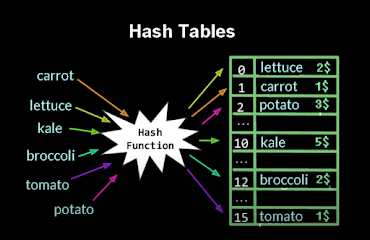
A Hash Table is a data structure in which the keys are mapped to values by means of a hashing function.A Hash Table is a data structure in which the keys are mapped to values by means of a hashing function. The hashing function takes on input, usually of any arbitrary length, and outputs an index where the key-value pair can be found. It’s often used as an alternative to an array or dictionary because it’s faster for retrieving and inserting data than other data structures.Hash tables are also called associative arrays, hash maps, dictionaries, symbol tables, or direct acyclic word graphs (DAWGs).Hash Tables in pythonHash tables are one of the most used data structures in Python. They are a key-value pair and can be used as a Dictionary, which is an unordered collection of items that stores keys and their corresponding values.The keys are unique, but the values can be duplicated. The main difference between a Hash Table and a Dictionary is that the order of items in a Dictionary is not relevant while in Hash Tables it is.Why Would You Use a Hash Table?A hash table is a data structure that stores information in a manner that is easy to search and update.The benefits of using a hash table are:- It is quick to access any given item.- It has a good spatial locality for large tables. This means that if you look at the items near each other, they are likely to be close together in the hash table as well.- It has a good cache locality for small tables. This means that if you look at the items near each of your CPU caches, they are likely to be close together in the hash table as well.Pros and Cons of Hash TableHash tables are a data structure that stores information in an unordered way. The table is composed of keys and values where the key is used to find the corresponding value. Hash tables are used for storing large amounts of data and for fast lookups, but it is not so good for searching.Advantages:-Hash Tables can be used to store large amounts of data in a very efficient manner.-It has a fast lookup time because it stores all the information in an unordered way.-The size of the table can be adjusted easily by increasing or decreasing the number of buckets (i.e., number of partitions).Disadvantages:-It does not allow searching efficiently because it stores all the information in an unordered way.ConclusionHash tables are most commonly used for looking up a value in a set of keys. Hash tables are an important data structure that can be used to improve the performance of many algorithms.The conclusion for hash tables is that they are one of the most commonly used data structures and is important for many algorithms.If you have liked this article, you may also like:Linked List: The Complete Guide to Linked Lists, Their Uses and What You Need to KnowThank you !💙Follow me on Twitter @Arjun_M_S_ ❤️
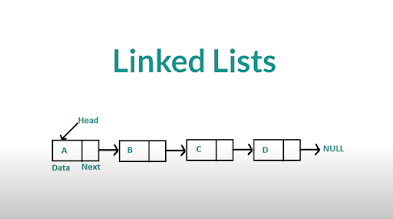
What is a Linked List?A linked list is a linear data structure that consists of a group of records, called nodes, each pointing to the next node by means of a pointer. Each node has two parts: the data and the link. The data is what the node stores and the link points to the next node in line.A linked list is an ordered set of nodes that are connected by one or more links. A link is a reference to another node in the list so that when you follow it you go to its successor.The first element in a linked list is always its head (or front). The last element in a linked list is always its tail (or back).How Can I Create A Linked List?A linked list is a type of data structure where each element points to the next. It is a linear data structure in which the elements are not stored at contiguous memory locations.The first element points to the second, and the second points to the third, and so on. This means that adding or removing an item from the beginning of the list requires updating every subsequent link.Linked lists are often used in computer programs because they are easy to implement and provide fast access to any element within them.Uses of Linked ListLinked lists are a data structure that can be used to store and access data sequentially. Linked lists are advantageous because they are easy to implement and allow for quick insertion or deletion of nodes.The linked list can be used for many things such as files on a computer, a grocery shopping list, or even a phone call log.Linked Lists vs ArraysLinked lists are a linear data structure that is used to store a series of data in order. They are different from arrays, which are a two-dimensional data structure that stores the same series of data in order.Linked lists have some advantages over arrays:They can be used to represent nonlinear structures like cycles and trees.They require less memory than arrays once they grow beyond a certain size.They can be implemented more efficiently on some machines such as linked list implementation on the stack or heap.They have a better locality of reference than arrays when they are traversed sequentially.The disadvantages of linked lists include:It is difficult to insert or delete elements at arbitrary positions in the list without rearrangingConclusion of the Guide to Linked Lists:This guide has covered how to create and modify linked lists as well as the various operations that can be performed on them. We hope it has been helpful in understanding the basics of linked lists.If you have liked this article, you may also like:Introduction: What is a Hash TableThank you!💙Follow me on Twitter @Arjun_M_S_ ❤️
